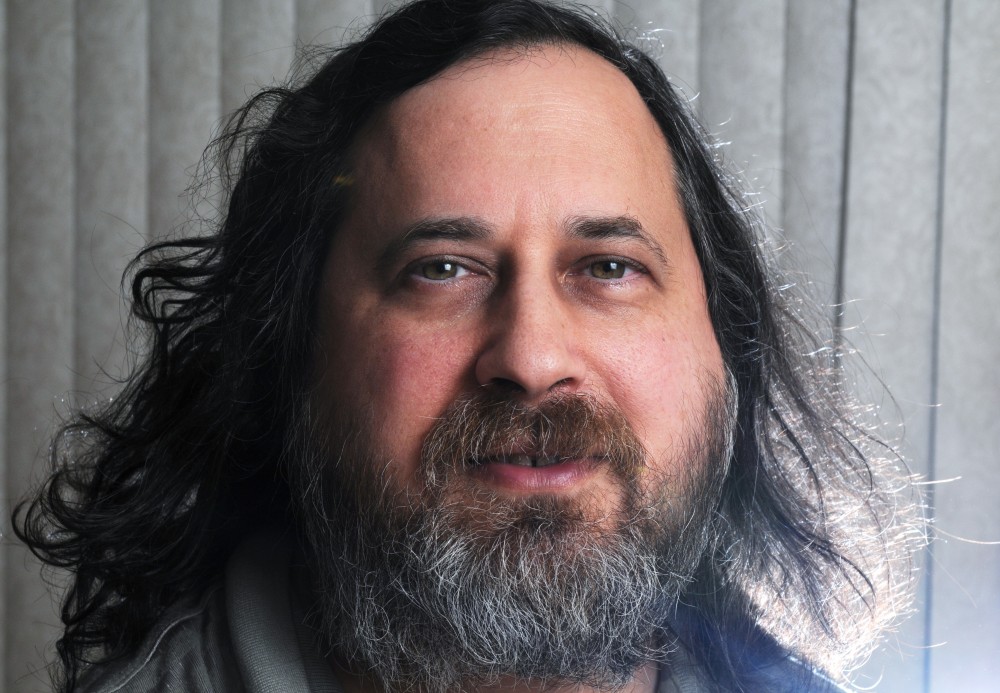
Digital rights issues may not be first on the list of most college studentsâÄô concerns, but some would like to see more people asking about them âÄî and Richard Stallman can give them a crash course on one viewpoint Tuesday evening. Stallman, who physics junior Kristopher Kirkland said is one of computer scienceâÄôs âÄúgrandfather figures,âÄù will speak at Willey Hall about the Free Software Movement , which campaigns for freedom so users can control their own computing activities. Stallman said his talk will be for anyone who uses computers. âÄúPeople generally donâÄôt realize how they are at the mercy of software developers when they use proprietary software,âÄù he said. Even to nonprogrammers, he said it matters whether control of the software is in the hands of one company or a community of users. The Free Software Movement has been working to make it easy to escape from proprietary software, he said. âÄúMany people in computer science see this as a breathtakingly exciting change in the way we think about software,âÄù John Riedl , computer science and engineering professor, said. StallmanâÄôs interest in free software was sparked, Reidl said, when he found himself prohibited from using the source code he himself had written for a program because MIT had sold it to another company. âÄúHeâÄôs been interested in free software where the programmer canâÄôt lose to anyone else or take away from anyone else the right to have access to that program ever again,âÄù said Reidl. In the case of free software, âÄòfreeâÄô refers not to price, but to the freedoms available to software users. âÄúThink of free speech, not free beer,âÄù the GNU project website reads. Stallman makes a clear distinction between the free software and open source movements. The free software movement is based on values of freedom and social solidarity, he said, while the open source movement is thinking about practical benefits only, and forgets whatâÄôs most important. However, Reidl said he doesnâÄôt make that much of a distinction. âÄúI care personally more about open source than all the things Stallman cares about in [the free software movement],âÄù he said. âÄúI think Richard Stallman has done fantastic things for the world,âÄù Reidl said. âÄúThe fact that he is choosing to be an ideologue on this point doesnâÄôt dim my admiration for him.âÄù The controversy, Reidl said, is that a lot of people are concerned about making a profit with free software. Stallman said, however, that programmers donâÄôt need to compromise to the demands of non-free software developers to make a living. Abby Riesterer , a fourth-year computer science student, said people know Stallman best through his contributions to software programs used by computer scientists today. âÄúIn general he is one of the most in-demand speakers in our industry,âÄù she said. Patrick Weygand , a computer science senior, said he thinks a lot of people will attend the talk because of StallmanâÄôs heavy involvement in Linux âÄî or rather, GNU/Linux. An erroneous association is commonly made between Stallman and Linux. Linux refers to a part of the GNU/Linux operating system, which Stallman was instrumental in creating. He initiated the GNU project in 1983 to create a free operating system, and it was eventually combined with Linus TorvaldsâÄô Linux to create a complete operating system. Philosophy aside, Kirkland, president of the UniversityâÄôs Association for Computing Machinery chapter, said there are a lot of digital rights issues that students donâÄôt know about, like digital rights managment , a way of locking files to make them nontransferable. Being exposed to Richard Stallman highlights the issue nicely, he adde