









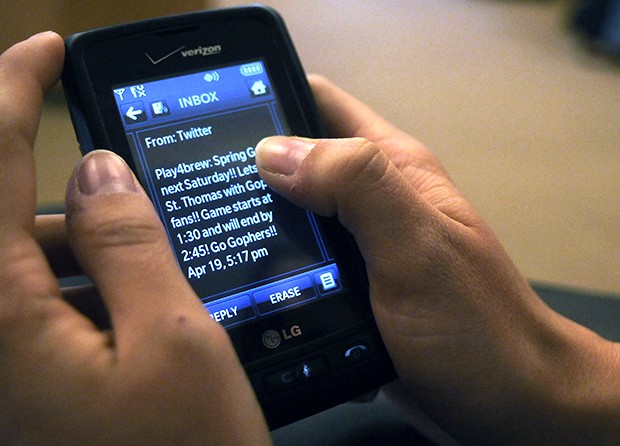
College coaches are beginning to take advantage of social networking advances, but according to the NCAA, they must be cautious with how their sites might attract recruits. With social network sites such as Facebook and Twitter, coaches and players can display messages about themselves and the program, which recruits can access freely. University of Minnesota football head coach Tim Brewster joined Twitter about a month ago, and although most of BrewsterâÄôs tweets have been inspirational quotes or mentions of practices, he has relayed a message to potential players. âÄúLet me know if you want to come be a Gopher! We are looking for playmakers!âÄù Brewster posted on Mar. 23. Coaches and players can post freely as long as they do not direct a message to a potential recruit, JT Bruett, University director of athletic compliance, said . The NCAA recruiting policy puts limits on how coaches can approach prospective student-athletes: âÄúElectronically transmitted correspondence that may be sent to a prospective student-athlete (or the prospective student-athlete’s parents or legal guardians) is limited to electronic mail and facsimiles. All other forms of electronically transmitted correspondence (e.g., Instant Messenger, text messaging) are prohibited.âÄù The NCAA has yet to implement any rules specifically for Facebook and Twitter, but Bruett said any posts have to be general in nature.
Related Blog Post:Deleting a Tweet doesn’t exactly mean deleted
Brewster said his staff is trying to take advantage of the new technology. âÄúTwitter is just another great way to get our message out about Minnesota Golden Gopher football, and I enjoy it,âÄù he said. âÄúItâÄôs a fun, entertaining site with good information about our program.âÄù With more than 770 followers and millions more having access to BrewsterâÄôs Twitter page, the athletic compliance office must check in to see that posts do not break NCAA policy. Bruett said he has received calls from people asking him to make sure certain posts are acceptable. âÄúWe check it if someone points something out that they have a question about,âÄù he said. âÄúThereâÄôs a lot of people out there looking out for BrewsterâÄôs page.âÄù There has already been an incident where one of BrewsterâÄôs tweets âÄî which referred to Star Tribune sports columnist Patrick Reusse as âÄúFat PatâÄù âÄî was removed from the page. Brewster said he didnâÄôt know how the tweet was posted in the first place and said he had no intention of making fun of anyone. The difficulties with social networking sites do not stop at coaches though. Coaches are the only people who can actively recruit students-athletes under NCAA policy, Bruett said, but some fans start Facebook groups and use other outlets with the intent of recruiting high school stars to their college. âÄúYouâÄôre always running up against people that are fans of the program that would like to encourage the next star recruit to come to Minnesota,âÄù Bruett said. âÄúThis certainly was an issue prior to social networking sites, but now itâÄôs becoming much more public when everybody can see them and read them.âÄù Bruett said any time someone starts a group directed at a specific recruit, his office must send a cease and desist letter telling the user to take down the page. People usually understand and take down the page after hearing that it violates NCAA recruiting policies, he said. While people are not supposed to recruit through these social networking sites, the opportunity for current players to offer some guidance to recruits remains âÄî but not at the coachâÄôs direction. Bruett said there is nothing forbidding players from adding recruits as online friends because he said it is possible the players could develop a relationship when they come for a visit. In addition to BrewsterâÄôs Twitter page, he recently started a website, Play4Brew.com, with updates and videos from practice. Brewster also has a website promoting his football camps and a personal blog . âÄúWeâÄôre really trying to stay on the cutting edge of technology and getting our message and our information out there, and I really think itâÄôs helped us a lot,âÄù Brewster said. âÄîSenior staff reporter Devin Henry contributed to this story.
