



The Daily sat down with University of Minnesota President Bob Bruininks Thursday in his office in Morrill Hall , where he discussed the budget, tuition increases, job cuts, the Spring Jam Riot and more. At the June 12 Board of Regents meeting, you discussed the proposed 2010 budget. Because of the federal stimulus money, the tuition increase for in state undergraduate students is 3.1 percent, reduced from the full 7.5. What will happen in 2012 when that one time money disappears?
ThatâÄôs obviously a concern to our students and to University leaders. WeâÄôre hoping that weâÄôll get some of the state funding restored in 2012 so that we can really lessen the impact of any tuition increase in that next two-year period. We will not have federal stimulus money, but IâÄôm hopeful that weâÄôll get additional state support and additional private support targeted at students, particularly students who are from middle income families. One of the things we plan to launch this year is a very aggressive annual giving campaign where we ask people to contribute to the University annually for academic priorities. Our most important priority will be to raise money for scholarship funding, so weâÄôre going to really be aggressive in this next two years to see if we can replace some of the federal stimulus money that has gone to support students and lower the impact of tuition. With both state support being reduced and the University cutting internal costs by about $95 million, what are the biggest challenges the University faces?
The biggest challenge we face going forward is to raise the kind of money we need to make investments to keep the quality of the University very high. The challenge needs to be met to continue to invest in finding ways to support expanded scholarships and fellowships for students. ThatâÄôs the biggest challenge going forward, is to make sure that we continue to invest in improving the quality of the University. We obviously need to look at the plan for financing long term. We need more diverse sources of funding. We need to rely somewhat less on state funding, but still find ways to keep a strong commitment from the state of Minnesota to our great university. The proposal would also eliminate about 1,200 jobs. Is that a necessary step in reducing internal costs? And if so, why?
If you reduce a dollar from expenditures at the University of Minnesota, youâÄôd need to recognize that 70 percent of every dollar we spend is tied to a person who works here, so you canâÄôt really reduce the budget very much at the University without affecting a number of people who work here. ItâÄôs just inevitable that if youâÄôre going to substantially reduce the budget, youâÄôre also going to have to find some ways to reduce the number of people. More than about two-thirds âÄî or close to 70 percent âÄî of the workforce reduction at the University was done gradually through a retirement incentive program, through judiciously filling only a portion of open positions when people left for other employment. The number of layoffs compared to other organizations in our state is much less than youâÄôll find at most other places in the state of Minnesota or beyond the state of Minnesota. I regret that we still have over 300 layoffs in this budget. WeâÄôre doing everything we can through federal stimulus money, through growing other sources of revenue, to ensure that as many people as possible are retained in their jobs and maybe even in some cases called back. We made a decision the other day to spend an additional $2.5 million of stimulus money in this next year or year-and-a-half to retain the employment of people in University services. ThatâÄôs going to help a great deal to maintain the quality of our environment, the quality of the service that we provide the University community. And how would you respond to some of the AFSCME members at the public forum [June 17]? They suggested instead to reduce wasteful spending practices and were fearful that clerical workers would see most of the cuts.
From the very beginning, I have argued that the chief approach to balancing this budget should be to reduce spending. I would argue that weâÄôre not talking about lots of wasteful spending. I know people can point to things they think are less important to spend money on than other things, but I donâÄôt think thereâÄôs a lot of wasteful spending at the University of Minnesota. I do think it is possible to spend less and to spend in a much smarter way. We have looked for all kinds of ways to reduce expenditures, particularly in being smarter in how we purchase our healthcare services and our healthcare support. WeâÄôve really driven down energy costs at a time when energy costs are going up. What impact will the budget cuts have on building projects around the University? What are the most vital projects, and which ones will be put on hold?
We havenâÄôt done a determination of all of the projects and what the final list of priorities will be going forward, but we have canceled a number of capital projects and we have under very serious review others. This is not a time to greatly expand the amount of square footage the University manages. WeâÄôre deciding what we need to do to renew the buildings we already have to make them more functional, make them more effective, make them more energy efficient. The second thing weâÄôre doing is deciding what new capital investments we need to make in the UniversityâÄôs six-year capital plan. That six-year capital plan has been discussed with the Board of Regents. It will go before the Board of Regents again next fall. All of those projects and all of those priorities are being scrubbed at the present time. The third thing weâÄôre exploring/studying quite extensively right now is whether we need all the buildings we have and whether we can use space much more effectively. We are consolidating space, we are downsizing space usage across the University âÄî in fact, thatâÄôs one of the UniversityâÄôs greatest cost savings in the UniversityâÄôs budget âÄî and we are going to undergo the decommissioning of certain buildings that are less effective and cost far too much to rehabilitate. You also presented the proposal to ban alcohol sales to premium seating sections in TCF Bank Stadium, Williams Arena and Mariucci Arena during athletic events. What do you think will be the potential financial impacts of this new policy?
ItâÄôs a little too early to know what the financial impact will be, but I think the financial impact will be negative. I personally believe that this was an unwarranted intrusion into the UniversityâÄôs business. It does pose a very difficult problem for the University of Minnesota to have such language inserted into a bill just a few months before weâÄôre opening the stadium, so IâÄôm not a happy camper about this, and I honestly donâÄôt think it was really a fair way to treat the University of Minnesota. The original plan did raise additional revenue for the University of Minnesota to retire the debt on the stadium. This does pose some challenge, but IâÄôm quite confident that people will respond, and theyâÄôll respond positively. TheyâÄôll keep their commitments to the University of Minnesota. WeâÄôre going to assess this very carefully during this next academic year, and if it looks like itâÄôs going to be a really serious economic problem, I plan to go back to the Board of Regents and seek authorization to see if we can get some changes in this legislation. Considering the riot that took place back in April during Spring Jam in Dinkytown, will anything be done differently at next yearâÄôs Spring Jam?>
WeâÄôre going to certainly look at these issues, and if thereâÄôs anything we can learn from this experience, weâÄôre certainly going to put those lessons to good use. WeâÄôll do everything we can to prevent such occurrences in the future. I think the most important thing to say about what happened in Dinkytown is that 98 plus percent of our students âÄî maybe even close to 100 percent of our students âÄî had nothing to do with that, were engaged in very purposeful activities and were not engaged in the destruction of property. This is basically an outlier event and is not at all emblematic of the respect and the leadership of the University of Minnesota students.
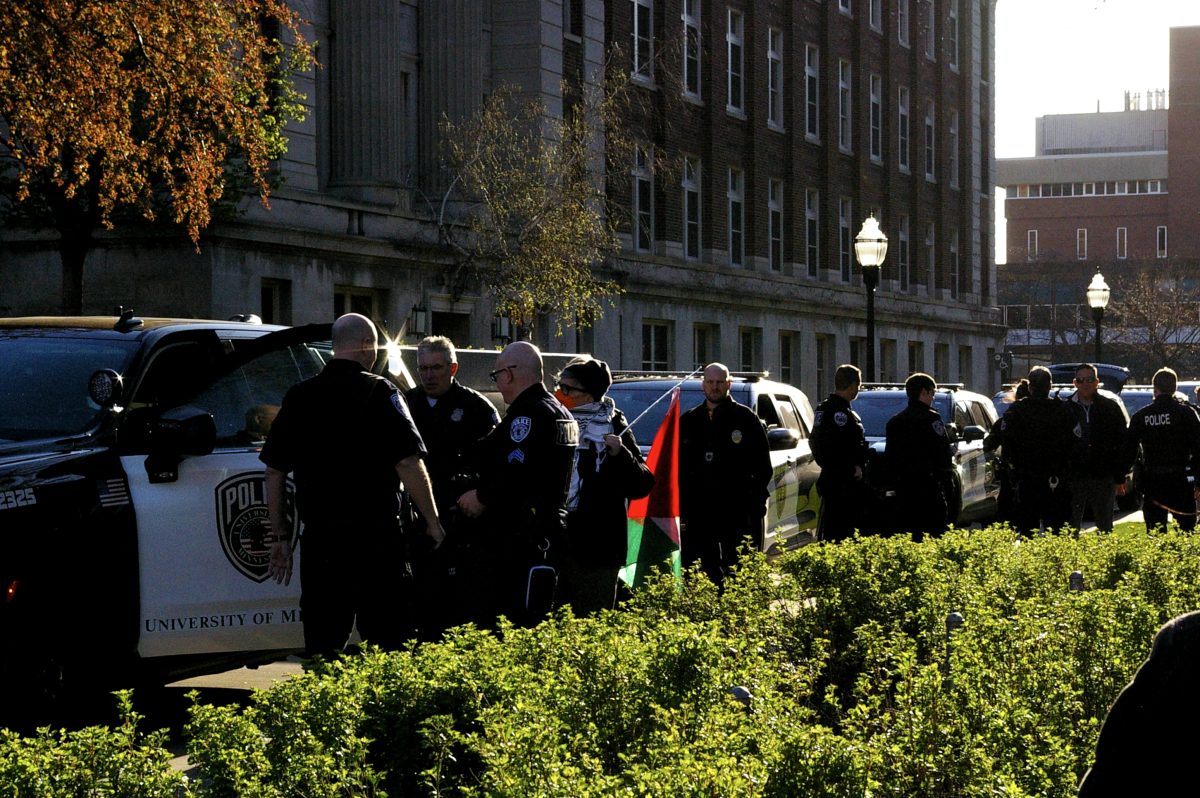
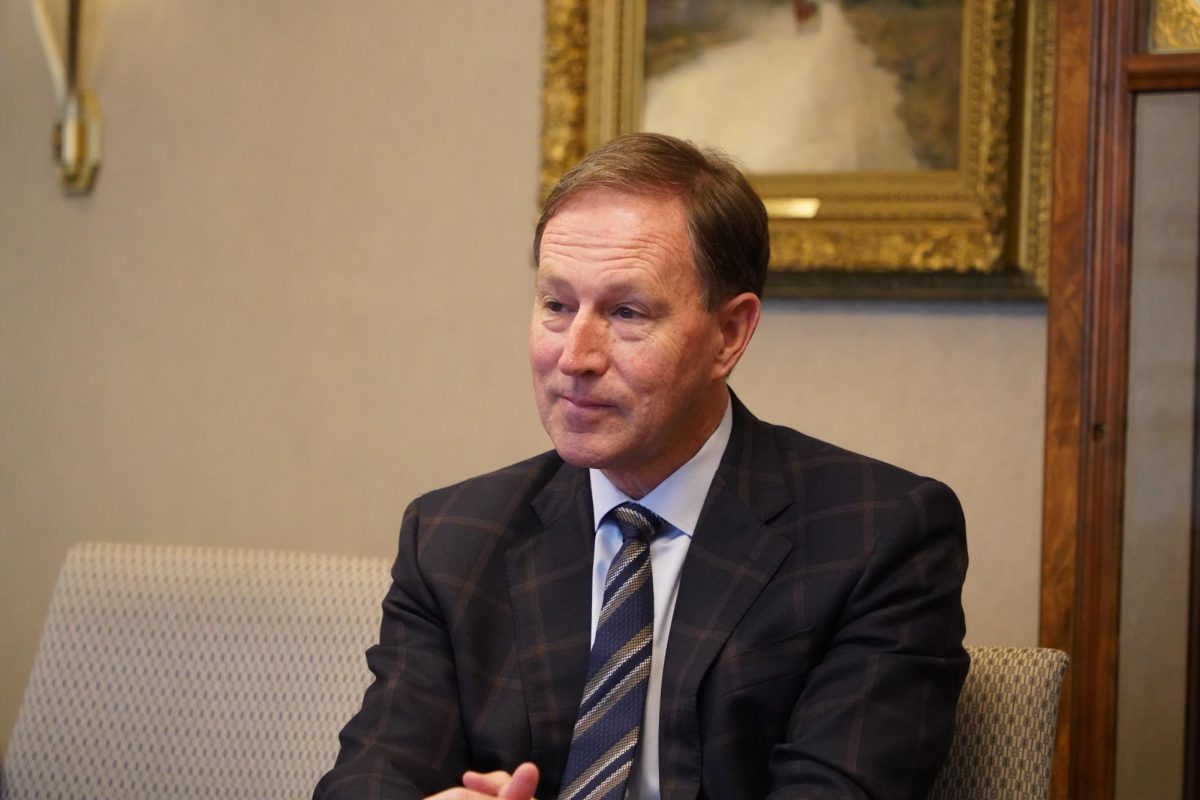

Bruininks talks tuition increases, job cuts
The University president also discussed his alcohol-free recommendation and the Dinkytown riot.
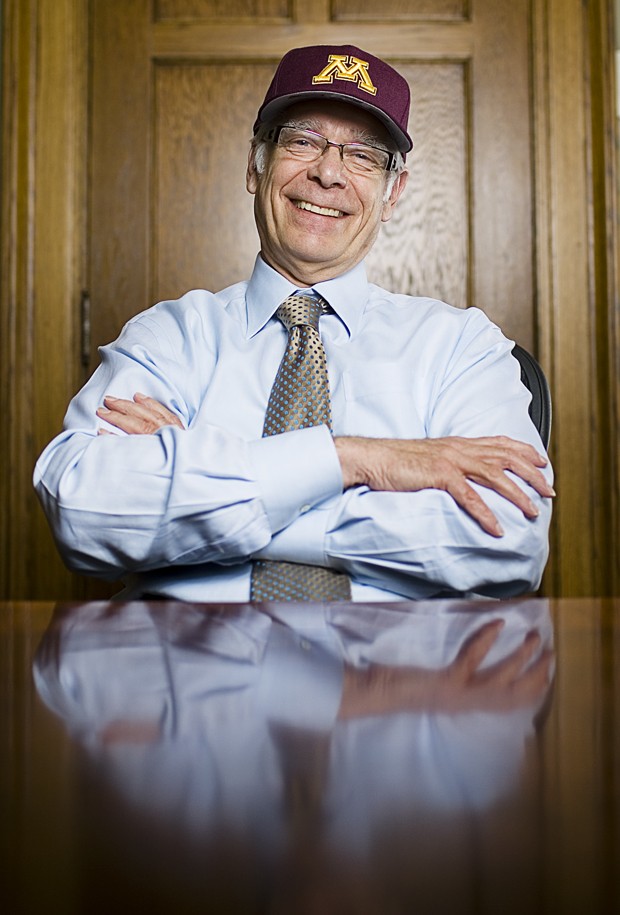
Image by Paul Bangasser
Bob Bruininks speaks with Daily reporter Elizabeth Sias on Thursday to talk about everything from budget issues to alcohol sales at the TCF Bank Stadium and summer recreation plans.
Published June 23, 2009
