




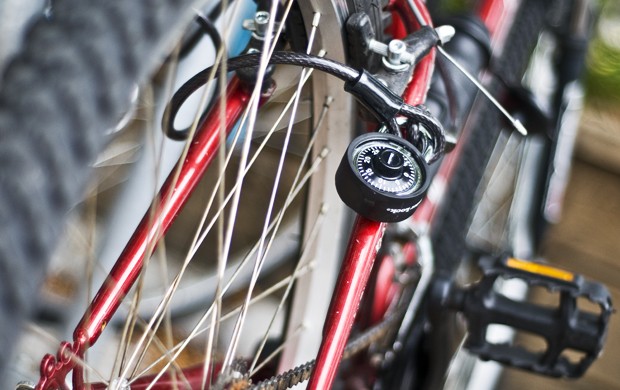
Locked into the rack by both a cable and U-lock , Jenn Shodis thought her bicycle would be safe overnight by the Rarig Center . But when morning came and Shodis, a music therapy senior, arrived, nothing of her bike but the cut cable lock remained. Despite studentsâÄô best efforts, bike theft is not an unusual problem at the University of Minnesota, but itâÄôs becoming less common. University police received 40 reports of stolen bicycles during September 2008 , but have received only 15 reports of bicycle thefts so far this month. The reduction coincides with the debut of the University police departmentâÄôs âÄúBait BikeâÄù program, in which police outfit bicycles with GPS -tracking devices and monitor them. If the bicycle is moved, officers will be alerted and can make an arrest. In the three weeks since the program was launched, it has not netted any would-be thieves, but University police Deputy Chief Chuck Miner said the program will take effect rapidly after the first arrests. âÄúAlthough I would like to think so, I donâÄôt believe our thieves keep apprised of the latest events through the news media, so I doubt they heard about it in the media and are now staying away from the U,âÄù Miner said. âÄúI do anticipate that once we start catching bike thieves via the bait bike, word will spread through their community and they will take their business elsewhere.âÄù So far this year, bicycle thefts have been scattered around campus, not centralized, as is common. Places central to campus like Coffman Union are frequently targeted by bicycle thieves, who are oftentimes juvenile residents of nearby neighborhoods or adults passing through the area, not University students, Miner said. Theft is the highest reported crime on campus, according to police. âÄúBike thefts represent a large number of those [thefts], so it [was] something we wanted to address,âÄù Miner said. From the first day of the fall semester in 2007 to the final day of the spring 2008 semester, there were fewer than 60 bicycle thefts reported to University police, according to records. In the same period during the 2008-2009 academic year, there were more than 90 bicycle thefts, records show. University police recommend that students use U-locks and not the more easily cut cable locks. While neither type guarantees a bikeâÄôs safety, the U-lock is a hurdle for potential thieves. âÄúItâÄôs just the path of least resistance for them,âÄù Miner said. âÄú[ItâÄôs] pretty hard to cut a U-shape lock off with a bolt cutter. Usually you have to have a blow torch or a cutting tool, and it makes a lot of noise.âÄù Because U-locks can cost nearly as much as the cheap, used bikes that many college students own, they hesitate to buy proper locks, said Sean Eddins, who works at Varsity Bike & Transit in Dinkytown. âÄúPeople are always asking for the cheapest one âĦ they have to take into account how much they really care about their bike,âÄù Eddins said. âÄúIf someoneâÄôs got the bike thatâÄôs worth it, theyâÄôre going to buy the nicer lock.âÄù University police are discussing the possibility of âÄútaggingâÄù unsecured bicycles with small, informative tags in an effort to educate bicycle owners around campus of basic security measures they can take. Police began exploring the possibility of using the baiting program several years ago and took cues from the University of Wisconsin police department , which instituted a similar program for the 2007 academic year. For Jenn Shodis and other victims of bicycle theft, there is little hope of having the stolen bicycle recovered. Even for Shodis, who said that the age, color and brand of her bicycle made it unusual, the odds of seeing it returned to her are slim. Nonetheless, âÄúI have my eyes open all of the time, just looking for my bike,âÄù Shodis said.



September bicycle thefts down from 2008
University police are deploying bait bicycles to catch bike thieves around campus.
Published September 22, 2009
