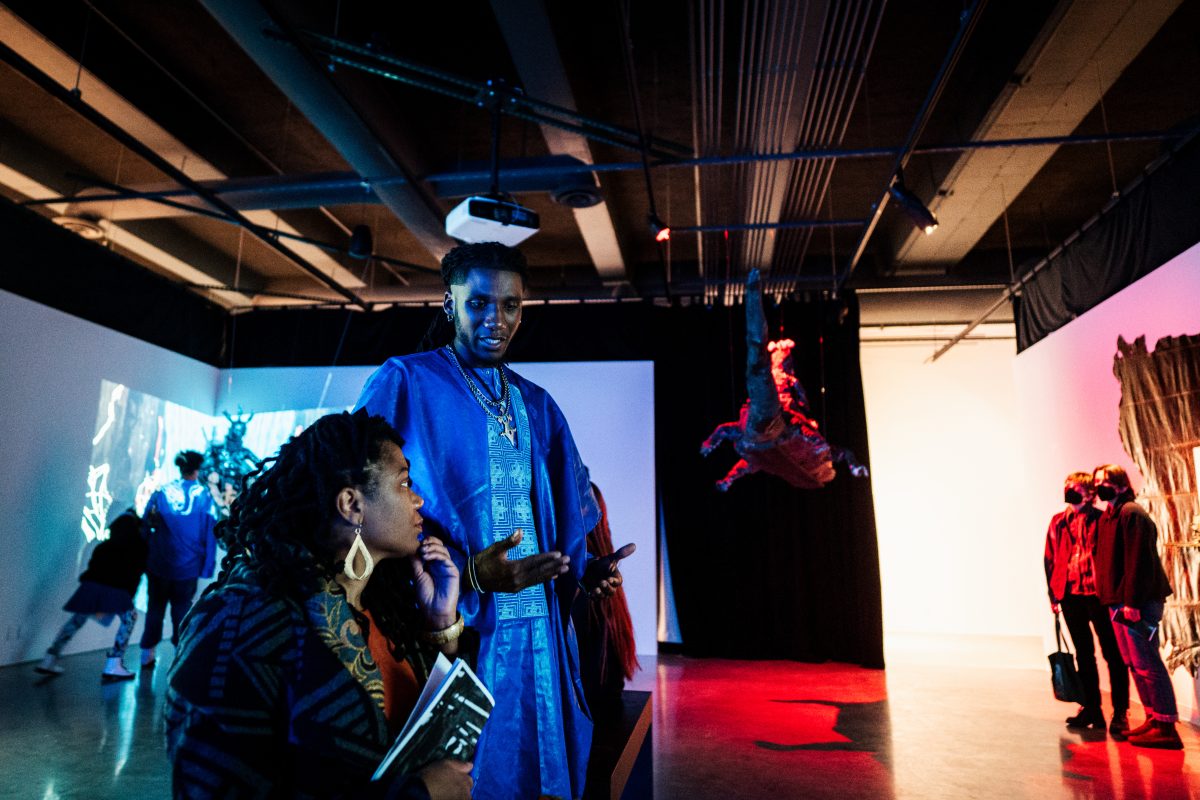




WHAT: âÄúSpace/TimeâÄù Opening SPACE: MCAD Gallery, 2501 Stevens Ave. S. TIME: Nov. 9, 6:30 p.m. PRICE: Free Two coordinates can uniquely map everything in the manifold of life. The Minneapolis College of Art and DesignâÄôs âÄúSpace/TimeâÄù exhibit specifies a point in space-time that can never be repeated and that no other labels will describe. That is, unless time is all just made-up hogwash, which seemed to be the opinion of many artists on display in this semesterâÄôs All School Project. The project, which takes its inspiration from H.G. WellsâÄô âÄúThe Time Machine, âÄú written more than 100 years ago (if you believe that time can really separate two objects), displays a wide variety of visual and aural interpretations of the interactions between space and time. The walls of the âÄúSpace/TimeâÄù exhibit are packed densely (depending on how you measure space) with works that sprawl throughout three floors of gallery space. The most striking thing about the entries in this project is the huge variety of interpretation between the artists on a single theme âÄî granted, it is a theme that has baffled physicists, philosophers and World Series umpires since conception. Some chose to take a very technical approach, such as Michelle BrestâÄôs âÄúPotential Energy,âÄù which calculates the amount of energy contained in a human body in terms of nuclear bombs. Others looked at the passage of time through other units such as in Megan DolanâÄôs âÄúMy Drive through Wisconsin,âÄù which tracked time through photos, a digital clock and the narrative flow of âÄúHarry Potter and the Chamber of Secrets.âÄù Many of the pieces didnâÄôt seem to address the issue of space/time in a very straightforward way, which is to say the exhibit had its fair share of alien and monster drawings. One of the most intriguing pieces on display was Patrick KispertâÄôs âÄúPast, Present, Future, Where Do You Live?âÄù The piece is a simple wooden plaque adorned with a picture of a brain with the label âÄúTime Machine.âÄù If time really is a conception of our mind, then the guest speaker at the gallery opening, Alan Lightman , would have the most developed sense of its illusive nature. Lightman is the author of an ethereal fiction collection entitled âÄúEinsteinâÄôs Dreams,âÄù in which each story portrays a different conception of time. Lightman will be speaking Monday about the similarities between his visions of time and their artistic representations. If the discussion of space and time were to exist between scientists and artists, it would be in a room so dark and smoky that it would be impossible to tell the two apart. Dealing with such elusive concepts is something that requires vision even more than technical ability because at this point, metaphor is almost as important as logic. This makes the dialogue between science and art a particularly fruitful one. Each viewer of the âÄúSpace/TimeâÄù exhibit will have the opportunity to vote for which work will receive the ViewerâÄôs Choice Award. In some ways, the award is symbolic of our understanding of the nature of time, wherein an eraâÄôs understanding is almost as subjective as the rules of art itself.


Art takes on the continuum
The “Space/Time” exhibit at MCAD showcases artists’ conceptions of the magical ether that surrounds us all.
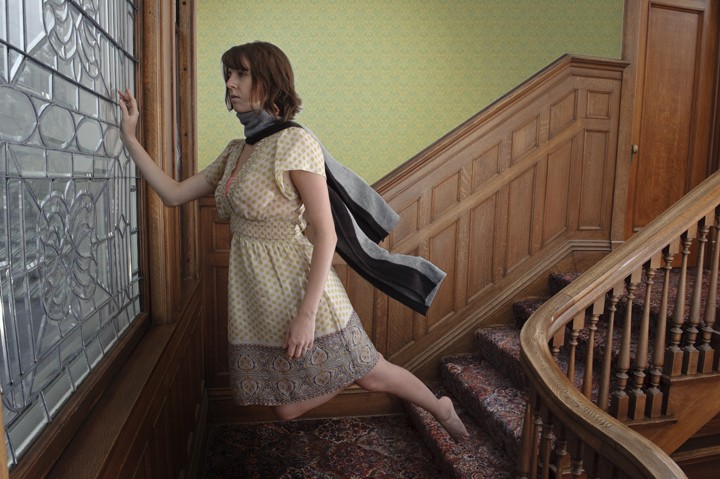
Gravity is best defeated in a warm scarf.
PHOTO COURTESY MICHAEL PAUL SIMON
Published November 4, 2009
More to Discover