

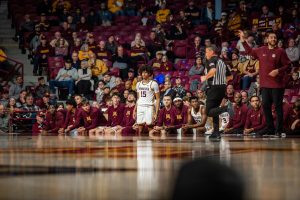



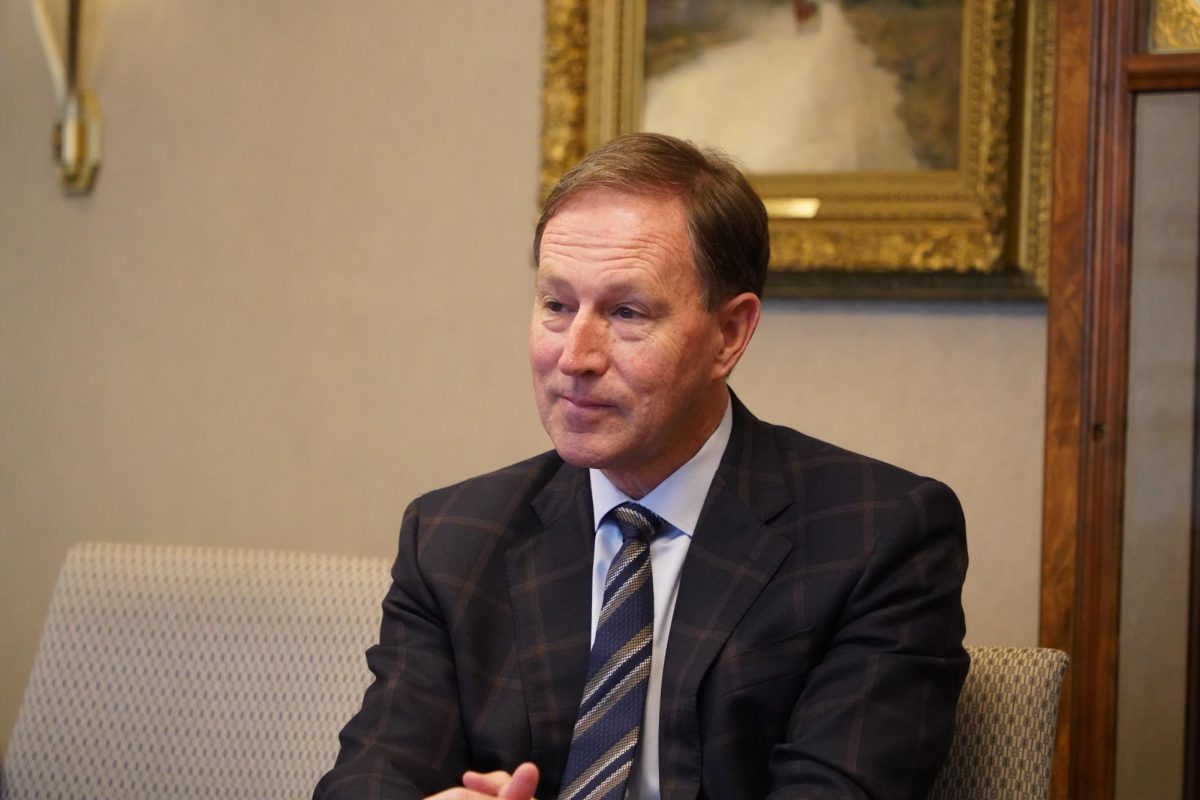
University of Minnesota President Bob Bruininks sat down with The Minnesota Daily to reflect on the success of the first football season back on campus. He also addressed the ongoing negotiations with the Metropolitan Council concerning the Central Corridor Light Rail Transit line and the new University-wide conflict of interest policy.
Do you think the Met Council issues with the University are going to be solved by Dec. 2? I donâÄôt think all the issues will be resolved by Dec. 2, but I do believe the University and the leaders of the Metropolitan Council are making a great deal of progress. Today, I believe if we continue to work together, we can find satisfactory solutions âÄî find a way to make this a successful major project. But I do believe, in the last few weeks, weâÄôve made a great deal of progress. IâÄôm much more optimistic that we can find viable solutions than I was even a few months ago. Is the University bringing up [issues] that have already been resolved? The UniversityâÄôs primary focus is on the issues that are necessary to protect our research. I think what we have to do is divide the issues into clusters of things that we would regard as primary and those we would regard as secondary. Protecting the University from the impact of vibrations and electromagnetic interference is vitally important when youâÄôre dealing with sensitive work. The second big issue that we think is fundamentally important is to have an agreement as to how we will monitor the impact of the LRT going forward in these same areas. How can we make sure the mitigations âÄî the protections âÄî that are put in place really hold and continue to be effective in protecting the UniversityâÄôs research projects and laboratories? The third big area is to come up with an agreement as to how weâÄôre going to manage these issues and protect our work and our ability to do our work during the construction period. I feel that particular area is one in which the University has a lot of background and experience, so I think we can find a way to resolve it. Those are the big issues. Are you disappointed at all at the turnout for this yearâÄôs football season? WeâÄôve had sellout crowds for most of the games. IâÄôve been a little disappointed in the last few games at the lack of turnout with our students. The problem, I think, is students donâÄôt like 11 a.m. Saturday games âĦ We were sold out this year. Our season ticket totals were met, and we even had people on a waiting list. I think this has been a really good year; weâÄôve had great attendance âĦ IâÄôd like to see more [students] come out to the game and actually stay âĦ The last two games, I think the attendance and the enthusiasm fell off a bit. Do you think that has anything to do with the record of the team? Absolutely. I think if we were 10-0 right now or 10-1, there would be a lot more enthusiasm, and the place would be absolutely packed. I donâÄôt blame people for being less enthusiastic when you lose some games you think you should have won. But I would remind people that this is very much a rebuilding process for the University. We think weâÄôre making progress. I want to tell our fans that the University administration and leaders really have a strong commitment to fueling a competitive football program. We will not be satisfied with seventh or eighth place in the Big Ten âĦ What do you think of the actions of Gophers athletes off the court or field? IâÄôve been very disappointed in the behavior of some of our student-athletes, but I donâÄôt think it is at all representative of the 750 student-athletes we have on campus âĦ But I must say I share the feeling of our head Athletics Director Joel Maturi and our head football and basketball coaches that some of the behavior weâÄôve seen is disappointing. I know the coaches expect a higher level of conduct. I expect a high level of student conduct from student-athletes and students of the University more broadly. Is it being handled? I think itâÄôs being handled quite well. I think some people have some disagreements with a decision here or there, but I think our coaches and athletics directors have been highly consistent. TheyâÄôve been resolute in dealing with these issues, and theyâÄôve been very quick to put discipline into the issue when itâÄôs called for. I would remind people that some student-athletes violated team codes in coach [Tim] BrewsterâÄôs first few months on the job, and he suspended those students permanently from the team. And so I would hope people would take into account all the actions the athletics department has taken âĦ Why a University-wide conflict of interest policy? ThereâÄôs a real strong reason why it should be University-wide. Most of the interest has been focused on the health sciences, but the possibility of conflicts of interest can be found in every field. They can arise in agriculture, in engineering sciences, in natural sciences âÄî any field of the University in some way can be impacted by issues that involve conflicts of interest. We felt this ought to be a University-wide policy; we ought to have the same standards for everyone. If gone unchecked, what can conflicts of interest do to a University? I think they can damage your reputation. WeâÄôve obviously had some challenges in that area. It can have a negative impact in your funding. When people have less confidence in you, they are less likely to make financial contributions or to support you in the court of public opinion or in public arenas where youâÄôre seeking funding or support âĦ It can have a negative impact on your ability to be competitive. If you have a serious conflict of interest and the federal government puts you on probation for grants and contracts, it can very seriously damage you and cost you a good deal of money. WeâÄôve actually had experiences like that in our past, and weâÄôre doing everything we can to prevent such occurrences in the future. I think society has an absolute right to expect us to live up to the highest ethical standards. Looking at the [Financing the Future] Task Force, what exactly does it mean for the University to focus on key academic areas? Overall, our commitment has to be to maintain the excellence, the quality, the reputation, the impact and the value of the University. We are the stateâÄôs research and land-grant University, and that imposes on us a very special obligation to ensure we continue to strengthen the quality of the University for our students, for our state and our society. To me, when we talk about academic programs, weâÄôre talking about what actions we need to take to make sure we put our resources into the areas that are most likely to contribute to the quality, the reputation, the impact and the value of the University. We will have to make some very difficult choices. You canâÄôt cut $150 million from the base budget of the University through state reductions without having some sort of impact on the range of activities at the University and the nature of your investments. We are going to have to reduce our cost. We are going to have to increase tuition somewhat, with a strong commitment in increase to need-based aid. I want to make sure we keep higher education affordable to our students. We are going to have to drop some of the things we do that have broad public purposes âĦ We canâÄôt continue to cut faculty, we canâÄôt layoff large numbers of staff without hurting the UniversityâÄôs ability to deliver on its mission. I think we have to make tough choices inside the University, but we also have to be aggressive in advocating for the UniversityâÄôs future. And that means we have to remind the leaders of this state that thereâÄôs no simple formula; if youâÄôre going to be a player in the world economy, if youâÄôre going to be a leader in the world economy, you have to continue to invest in the University of Minnesota. Is there a time frame for when youâÄôre going to start making decisions? WeâÄôve already made a lot of decisions âĦ IâÄôm going to get a formal communication out in December to recount what actions weâÄôve already taken and formulate some actions, or at least proposed actions, that I think we need to take in the next few months and perhaps in the next few years. I expect this committee will give us high-level guidance on setting priorities for dealing with the long-term financial future of the University. This is a long-term process that will require dozens of solutions before weâÄôre finished âĦ WeâÄôve done a lot of things to cope with the extraordinary challenges at the moment, but weâÄôll have to do many more things, and I plan to work with the leaders of the University in announcing them over the next several months.
U pres. discusses light rail, athletics
President Bruininks sat down with the Daily to reflect on the success of the first football season back on campus.
Published November 24, 2009
