



Peggy Larkin is a court clerk living in low-income housing in Maple Grove, Minn. Brian Peterson is a recenteconomics and urban studies graduate of the University of Minnesota. Despite their different backgrounds, both Larkin and Peterson played roles in the passage of what Peterson calls âÄúlandmark legislation.âÄù The Tenant Bill of Rights, signed into Minnesota law May 11, is the first update to tenant protection in decades, Peterson said. The law extends protection to tenants in areas without existing city ordinances. With protections such as caps on late fees and a reformed tenant screening process, the legislation is especially applicable to low-income renters and college students who rent around campus. Tenant screening processes in place in the Twin Cities served as a model for the law, but the other elements are new statewide. âÄú[Students are] signing leases for the very first time,âÄù Peterson said. âÄúThe potential for [landlord] abuse of power is pretty high.âÄù Working with the tenant advocacy organization HOME Line, Larkin testified as a troubled renter who would have faced less adversity if currently passed laws had been around for her. The management at LarkinâÄôs Hickory Ridge Townhomes in Maple Grove once alleged she owed over $3,000 in late fees and unpaid rent. âÄúA receipt would have been very beneficial for me,âÄù she said. âÄúWhat I had to do was go to my bank and get checks all the way back to 2004.âÄù One part of the bill, requiring a receipt for rent paid upon a tenantâÄôs request, would have solved LarkinâÄôs problem. Peterson interned with HOME Line and was exposed to troubles like LarkinâÄôs first-hand. âÄúSome of these things [in the bill] were just so straightforward and obvious that it shocked me that they hadnâÄôt been put into law yet,âÄù he said. Along with a late-fee cap of 8 percent and the receipt requirement, HOME Line Public Policy Director Michael Dahl listed reform for rental applications processes and more equality for covering attorney fees if legal action is taken as the major components of the Bill of Rights. Previously, only tenants were required to cover the fees. This point epitomizes what the experts see as leveling the field between tenants and landlords. âÄúWeâÄôre just overdue for a good look at whatâÄôs working and whatâÄôs not,âÄù said Sen. Scott Dibble, DFL-Minneapolis , who co-authored the bill with Sen. Linda Higgins, also DFL-Minneapolis. Before the passage of the new law, tenants had to pay attorney fees if they lost a court battle with a landlord, but landlords were not held up to the same standard. In the case of screening fees, landlords were âÄújust kind of pocketing them,âÄù without a transparent process, Dibble said. Since renters donâÄôt have legal representation to contest these practices when signing a lease, landlords were âÄúgreatly advantaged in these transactions,âÄù Dibble said. Beginning in August, rental applications must only carry fees if an applicant has a real chance of being accepted. Applications must also be processed in a sequential order, so landlords âÄúcanâÄôt pick and choose who they want to rent to,âÄù Dahl said. Over spring semester, Peterson watched the bill progress. âÄúWhen I started the internship âĦ we had just introduced the bill and we were debating and everything like that,âÄù he said. âÄúA few days after my internship officially ended, the bill was signed by Gov. [Tim] Pawlenty [on] May 11.âÄù After proposing the bill to the House of Representatives and Senate in February, legislators told tenants and landlord lobbyists to hash out a compromise and return to the Capitol with that bill. For HOME Line advocates, this meant paring down a 27-point list of demands to seven. Despite only about a quarter of the original ideas becoming law, Dahl said the sheer multitude of requests made the bill easier to pass. âÄúWe came in with a âĦ slate of things that needed improvement,âÄù he said. âÄúThatâÄôs just not how itâÄôs been done.âÄù Over a series of about 10 meetings, the lobbyists on the tenantsâÄô side and those representing landlords met and went through each issue. Months later, the two groups presented their compromise to legislators in early May and it was well-received with a vote of 100-30 in the House and 56-6 in the Senate. âÄúWhen you can come to an understanding between two adversarial parties, the legislators are much more apt to move that legislation through the process,âÄù said Ron Elwood, a lawyer lobbyist with the Legal Services Advocacy Project , a low-income lobbying group. âÄúThe overwhelming vote on both the House and Senate was a testament to the ability of both parties to reach accommodation,âÄù Elwood said. For Larkin, the law carries a special significance. âÄúMany of my neighbors are one step away from homelessness, and this is a way that we can help not put them on the street,âÄù she said. The low-income residents in complexes like Hickory Ridge are âÄúoften not as aware of their rights [and] theyâÄôre often not familiar with how to keep the best records,âÄù Larkin said. Dahl said HOME Line would be fighting to pass the remaining laws in the upcoming legislative sessions. âÄúI can tell you for certain weâÄôre never going to come in with just one or two [ideas],âÄù he said, âÄúbecause that doesnâÄôt work.âÄù


Tenants protected under Minn. law
The Tenant Bill of Rights updated rent protections for the first time in 20 years.
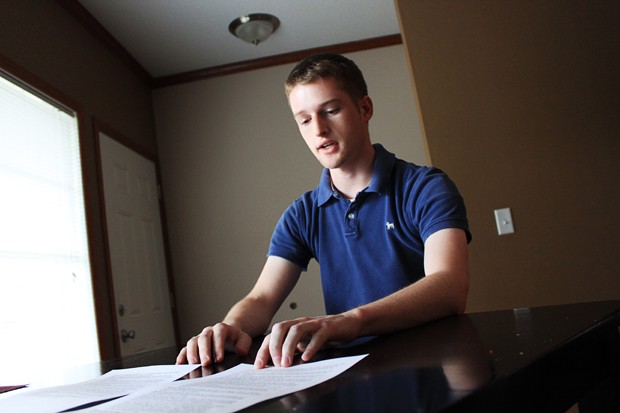
Image by Gina Reis
Brian Peterson, recent University graduate, explains the major components of new tenant protections. Of the new regulations, late fees will be capped at 8 percent for all leases that start 2011.
Published May 26, 2010
More to Discover