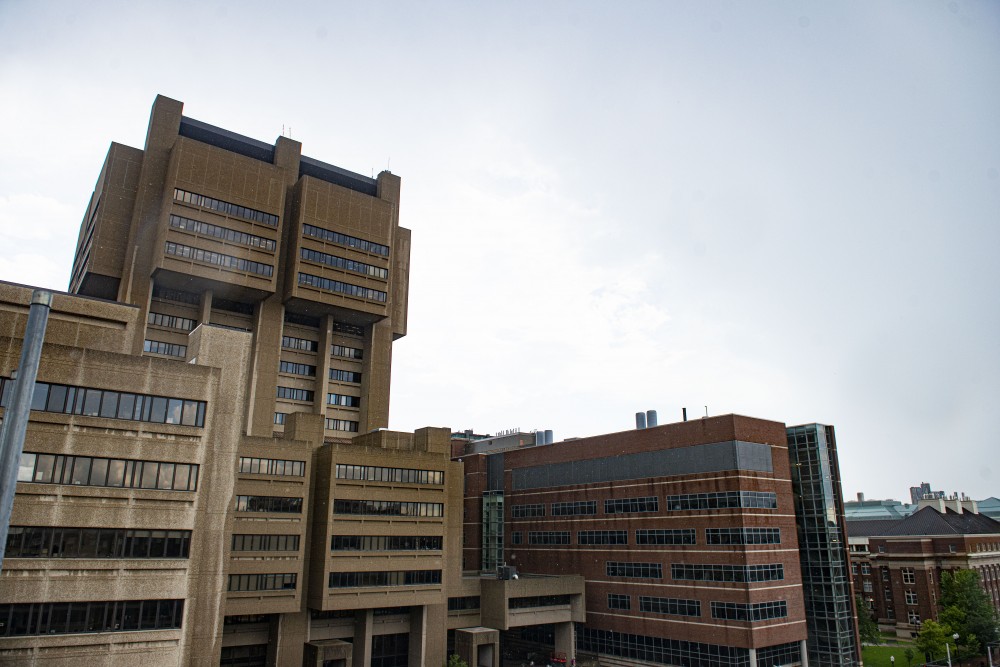




The University of Minnesota ranked among the top 10 research schools in the country for the first time in its history, based on year-end data presented Friday.
But sustaining the growth of the past five years will be difficult given drop-offs in federal funding.
The University checked in at No. 10 in the list of public and private research institutions compiled by the National
Science Foundation. It fared even better among public schools, overtaking Ohio State University for the eighth spot.
While the school moved up two places since 2005, itâÄôs still struggling to reach its goal of being a top three research institution.
Vice President for Research Tim Mulcahy attributed growth in the UniversityâÄôs research operation âÄî expenditures have increased by $212 million since 2004 âÄî to strong planning and allocating resources to âÄúget as much bang for the dollar as possible.âÄù
He emphasized the NSF findings in an annual research review with the Board of Regents on Friday.
âÄúIf youâÄôre going to rate a university on its research enterprise, this is the single number most would rely on,âÄù Mulcahy said.
Faculty have bought into the UniversityâÄôs research mission, and pilot funding and new programs have spurred collaboration and innovation, he said.
âÄúI used to think the goal of being [among] the top three research universities was only an aspiration,âÄù Regent Linda Cohen said. âÄúBut after this report IâÄôm beginning to think perhaps this could be a reality.âÄù
The end of the federal stimulus program âÄî which netted the University $208 million over two years âÄî and shifts in federal funding could threaten future research growth, Mulcahy said.
âÄúTo be honest with you, IâÄôm concerned,âÄù he said. âÄúThe future does not look bright for research at the national level.âÄù
All institutions would be affected by a dip in federal funding, but Mulcahy said the University is well-positioned and has a strong chance at continuing success.
The University is currently working on streamlining policies that âÄúimpedeâÄù researchersâÄô abilities to pursue grants and be competitive,
Mulcahy said.
President Bob Bruininks estimated that University research helps create upwards of 35,000 jobs in the stateâÄôs economy and used the data to underscore the need for state support of the University and its research mission.
âÄúIf anybody wants to create jobs in the state of Minnesota,âÄù he said, âÄúprobably the worst thing you can do is cut the University to
the bone.âÄù
Financial turnaround
The University is in âÄúgood financial healthâÄù and things are beginning to turn around after the recession, Chief Financial Officer Richard Pfutzenreuter said Friday during an annual finance review.
âÄúItâÄôs been a tough couple of years with the economy,âÄù Pfutzenreuter told the Board of Regents. âÄú[But] the University, I think, is certainly on the repair.âÄù
The UniversityâÄôs net assets, which include its investments, buildings and other payments, increased $171.5 million during the 2010 fiscal year, which ended June 30. This compares to a $342.1 million drop in net assets the previous year.
Much of the growth was driven by improvement in the UniversityâÄôs investment portfolio and the construction of new buildings, like the Science Teaching and Student Services building completed this fall.
The UniversityâÄôs expenses remained essentially the same as the previous year, something Controller Mike Volna attributed to an âÄúextraordinary effortâÄù to cut costs and budget more efficiently.



U breaks into top 10 research schools
The University’s research operation grew faster than all but two schools.
Published December 13, 2010
More to Discover