


The hundreds of journal articles Frank Cerra wrote about 15 years ago are now quoted as âÄúhistorical literature.âÄù
âÄúItâÄôs not relevant to the science thatâÄôs going on today,âÄù he said. âÄúIt set the foundation upon which more
science could evolve.âÄù
Cerra âÄî dean of the University of Minnesota Medical School and senior vice president for health sciences of the Academic Health Center âÄî feels heâÄôs done the same thing in his career at the University, working to position it as a top research institution.
As Cerra, 67, prepares to retire from 15 years of administrative leadership on Dec. 31, he is tying up the loose ends of a tenure marked by new buildings, commercial partnerships, curriculum changes and faculty conflicts of interest. Cerra plans to take a little time off to, among other things, write a book.
Since getting his start at the University as an associate professor of surgery in 1981, Cerra has risen through the ranks.
âÄúItâÄôs pretty dramatic to see that transition,âÄù said Colin Campbell, associate professor of pharmacology and chairman of the AHCâÄôs Faculty Consultative Committee. âÄúYou have to feel like he got those promotions not because people liked him or owed him money. He got those advances because thereâÄôs a recognition that heâÄôs an incredibly smart, energetic and talented person.âÄù
Still, not all memories of Cerra are happy ones. For a variety of reasons, a majority of faculty members contacted preferred not to share their thoughts on him for this story.
With each tough decision he made, Cerra said, there was an effort to be collegial and incorporate a variety
of viewpoints.
âÄúAfter 15 years, there are people who donâÄôt agree with some things IâÄôve done or decisions IâÄôve made,âÄù he said. âÄúThatâÄôs fine. They understand why I made them and what the circumstances were and move on.âÄù
An era of unrest
Cerra stepped up to the plate to lead the Medical School during a time of turmoil.
It was the 1990s, and dwindling federal funding was a grave and lingering threat to the school.
At the time, the University still owned its hospital, but both it and the Medical School faced a growing deficit.
If that wasnâÄôt enough, a federal lawsuit in 1995 alleged that John Najarian, head of surgery at the time, had been illegally selling his antirejection drug for more than 20 years without Food and Drug Administration approval. It also accused him of tax fraud, mail fraud and embezzlement.
Although Najarian was acquitted of the charges, then-University president Nils Hasselmo stripped him of his chairman position and his tenure.
Afterward, the UniversityâÄôs National Institutes of Health rating slipped dramatically. The NIH also imposed sanctions on the University and placed it on âÄúexceptional status,âÄù meaning it would lose funding if it didnâÄôt reorganize the Medical School.
Hasselmo appointed William Brody as AHC provost to head the reorganization. Brody implemented a system of âÄúre-engineering,âÄù which some say gave administrators sole decision-making authority.
In 1996, the Board of Regents proposed changes that would have eliminated tenure, prompting a âÄútenure war.âÄù Although the proposal failed, the battle left faculty members feeling powerless, and a tight vote sided against unionization. In a separate vote, AHC faculty members were much less in favor of unionizing.
When Brody left in 1996, Cerra, who had been serving as the dean of the Medical School for nearly a year, agreed to HasselmoâÄôs request to leave the deanship and take over as AHC provost.
Cerra said he approached the situation from a âÄútop-downâÄù perspective in which the administrators set a direction and then engaged the faculty. He said he tried to engage everyone in the reorganization, using e-mail, public forums and hallway discussions âÄî some collegial and some contentious.
âÄúI felt it was necessary to get all of those feelings out on the table and going from an anger, reactionary mode to one where people could restore their identities, restore the schools and begin to work together to create an academic health center that would meet workforce needs, do research and become involved in the future of health care,âÄù he said.
In 1997, Cerra made a bold move: He led the sale of the UniversityâÄôs hospital to Fairview Health Services, vowing to keep it a teaching hospital.
The decision drew a variety of responses, not all of them positive.
Neuroscience professor Robert Miller wrote in a 1999 article in Academe Magazine that the sale was the âÄúsingle largest disaster in the hundred-plus-year history of the institutionâÄù and that faculty members were given no say in the matter.
The lasting effect of the merger is tension between faculty members at the University, whose mission is to educate, and Fairview, which is governed by a board of directors and a bottom line.
The University still owned the hospital when James Carey, a physical therapy professor, first arrived âÄî and it was nice, he said. So nice that he said itâÄôs time to think about getting it back.
âÄúWe could bring patients into class all the time,âÄù he said. âÄúâĦWe routinely would send our students to those clinics to learn and into our own classrooms to learn. That just isnâÄôt workable in the existing environment.âÄù
Many faculty members are concerned about the potential for imbalance in meeting FairviewâÄôs needs and the UniversityâÄôs needs in the relationship between Fairview and the Medical School, said David Ingbar, professor of medicine.
ThereâÄôs a fear among the faculty that the primary function of the Fairview-University relationship could be to provide clinicians for Fairview rather than fulfill the UniversityâÄôs academic mission, Ingbar said.
Dissent over the dual role
Down the hall from Executive Vice Dean Mark PallerâÄôs spacious office in the Mayo Building is one with Frank CerraâÄôs name on the door alongside the words âÄúDean of the Medical School.âÄù
But depending on the day, Cerra could be across the street in his other office, that of the senior vice president for health sciences of the Academic Health Center.
ThereâÄôs been tremendous disagreement over whether the dual role of dean of the medical school and head of the AHC should remain one or be split in two when CerraâÄôs successor, pediatrics chairman Aaron Friedman, takes over.
In July of this year, 93 percent of 354 Medical School faculty members responded in a survey that they believed the school should have a dean whose âÄúsole responsibilityâÄù is to manage the Medical School.
âÄúThere was an overwhelming response that we want our own dean,âÄù Campbell said.
But in an interview last week, University President Bob Bruininks had a different interpretation of the survey. He said that the 93 percent group was, in fact, signaling its desire that the positions stay integrated.
âÄúI think the overwhelming sentiment is that combining these two positions is the strongest possible position for the University to take in the long-term future,âÄù he said.
The dual role âÄúgreatly streamlined the decision-making, it reduced administrative overhead, it strengthens the leadership platforms of the vice president and dean,âÄù Bruininks said.
But many faculty members argue that the Medical School is much larger than other schools in the AHC, so it shouldnâÄôt be handled by someone whoâÄôs only focusing part of his attention on it.
The prompt was a two-part question, which also stated that the dean should have a direct line of communication with the president. As the position exists now, Cerra communicates frequently with Bruininks through his leadership role in the AHC.
âÄúWe felt that the Medical School was such a driving force of the University and the Academic Health Center, it was worthy of having a direct line âÄî not to be arrogant or anything like that âÄî but just because itâÄôs an important unit that is critical to the overall operations of the University,âÄù Carey said.
If the survey wasnâÄôt clear enough, three months earlier, 35 members of the Medical School FAC sent a letter to Bruininks asking him to restructure the AHC and alerting him of the âÄúneed to return the leadership of the Medical School to the position of dean of the Medical School without being combined with the senior vice president of Health Sciences (SVPHS) position.âÄù
In their reasoning, the faculty members wrote that the cost savings Cerra and Bruininks claim results from combining the positions is âÄúnot apparent.âÄù Further, the rigid leadership structure distances faculty members from the leadership, jeopardizing the possibility of a fully engaged faculty.
Bruininks wrote back two months later acknowledging that he had received their letter.
Beginning in January, Friedman will assume a slightly different role than Cerra: dean of the Medical School and vice president for health sciences of the AHC. Some of the administrative oversight of the health science colleges that Cerra performed will go to the University Provost Tom Sullivan.
When asked what the differences between his and CerraâÄôs positions are, Friedman said, âÄúI think it remains to be seen what the real distinctions are. IâÄôm not sure.âÄù
Ultimately, incoming University President Eric Kaler will make the final decision.
For some, that disconnect between faculty membersâÄô desires and administrative decision-making has soured the view of CerraâÄôs tenure.
While many blame faculty apathy, professor of medicine Gregory Vercellotti said they werenâÄôt always that way, but have grown more apathetic as their power seems smaller.
âÄúWe had leadership here that consistently didnâÄôt listen to faculty or didnâÄôt reward faculty input âÄî IâÄôm not going to say punish âÄî but basically that faculty input wasnâÄôt listened to,âÄù he said. âÄúAnd after a while, faculty said, âÄòWell, whatâÄôs the use, itâÄôs going to
happen anyway.âÄôâÄù
Questionable relations
As a surgery professor, CerraâÄôs reputation was at times fogged with connections to sketchy operations.
A colleague of CerraâÄôs, David Knighton, was found by the FDA to have illegally sold and promoted his drug, Procuren, through his company, Curative Technologies.
Cerra worked in KnightonâÄôs clinics for several years in the 1980s.
Asked how he felt about KnightonâÄôs product, Cerra said he takes an academic view âÄî he believes studies must be done to prove a treatment is efficacious and cost-effective.
âÄúThat was the trail it was on,âÄù Cerra said, âÄúand then David decided to move it out of the University and deal with problems he had to deal with that I know little about.âÄù
Years later, when Cerra was in the running to become dean of the Medical School, his reputation was again tainted by his controversial relationship with Caremark, a company Cerra and other University doctors were accused of illegally referring patients to.
Cerra was a leader in arranging a partnership between the University and Caremark, a company that provides medication and other treatment to critically-ill patients in their homes.
In 1993, the FBI investigated the University-Caremark relationship for illegal kickbacks. Eventually, the accusations were dismissed.
Cerra said he thinks people were suspicious of the relationship because it was a concept that was ahead of its time.
âÄúIf you get too far out in front of your peers, they become distrustful of whatâÄôs happening,âÄù he said.
Keeping up with the times
A hallmark of CerraâÄôs legacy at the University will undoubtedly be a very visible one: buildings. Over the course of his tenure, Cerra has overseen the construction of or commitment to more than $900 million worth of new buildings on campus, including his crown jewel, the Biomedical Discovery District.
Cerra is responsible for bringing the University back to a competitive position after years of antiquated laboratories, Paller said. To be among the top 50 or 25 schools, laboratories must be updated every 15 years, he said.
The laboratory building that is now Nils Hasselmo Hall went up in 1997. The labs used prior to its construction in Moos Tower and the Philips-Wangensteen Building were built in the 1970s, Paller said.
âÄúWhat would happen if Target didnâÄôt remodel every couple of years?âÄù Paller said. âÄúTheyâÄôd end up being K-Mart and closed.âÄù
Cerra led the charge to open the McGuire Translational Research Building in 2005, which houses the kind of interdisciplinary research many argue is crucial to the future of education.
âÄúCerra should get a lot of credit for really championing that and really pushing that through,âÄù Campbell said. âÄúI travel to a lot of places that are a lot more famous than us, and they donâÄôt necessarily have some of the advantages we have here.âÄù
But Carey said the fixation on research and facilities can sometimes make the UniversityâÄôs âÄúDriven to DiscoverâÄù motto seem like âÄúDriven to Dignify.âÄù
âÄúItâÄôs certainly logical to pursue that criterion of academic success, to pursue the dollars that are used to rank institutions,âÄù Carey said. âÄúBut beyond that point, it still stands firm in my mind that education and service need an equal amount of visibility.âÄù
Academia and industry
Far from discouraging ties with industry, CerraâÄôs philosophy is that relationships with the private sector are not only good, theyâÄôre common sense necessities for any health sciences center.
âÄúItâÄôs the public sector that funds the basic and translational research that benefits the private sector,âÄù he said. âÄúYou can decide how you feel about that, but thatâÄôs the way it works and itâÄôs whatâÄôs driven the economy of this country to be what it is.âÄù
Under CerraâÄôs watch, a number of Medical School faculty members were found to have unethical relationships with private industry, including David PollyâÄôs consulting deals with Medtronic and Leo Furcht funneling grant money into his own company, which he later sold.
âÄúWeâÄôve actually had very few of those, if you count them up,âÄù Cerra said.
Eventually, the conflicts of interest became serious enough, however, that they forced the entire University to overhaul its Conflict of Interest Policy, with Cerra and Furcht helping to shape many of the details in the new policy.
Cerra said the policy reform is happening because people want to know whether their doctor has ties with a company that could affect his or her judgment about a pill or device.
âÄúThese new rules are all about disclosing that and managing it in such a way that that influence doesnâÄôt happen,âÄù he said.
Despite the conflicts that still spring up, the Medical School is faring better in that area now than it was when Cerra first became dean, said Paller.
âÄúIn the 1990s, if you asked someone on the street, âÄòWhat do you think of the Medical School?âÄô they would say, âÄòWhat a mess, what a bunch of bums, what a bunch of renegades or cowboys.âÄôâÄù Paller said.
But now, if you ask people what the best thing about the University is, Paller said, âÄúUp until this year they wouldâÄôve said athletics and the Medical School are either No. 1 or No. 2.âÄù
âÄòDrinking from a firehoseâÄô
When Aaron Friedman tries to picture taking over for Cerra, he said he thinks of âÄúdrinking from a firehose.âÄù
Having only been at the University for three years, Friedman hasnâÄôt had the chance to develop the strong ties with the Legislature or others in the community that Cerra spent decades furthering.
After a couple months away from the University, Cerra will return to it the same way he entered: As a faculty member in the
surgery department.
In the meantime, he said he plans to travel, work on a collaborative health care reform project and continue writing his book about the history of the AHC.
HeâÄôll probably still get up at around 4 a.m., a habit that began decades ago during his years as a surgeon and has stuck with him ever since.
After the demolition of Millard Hall, Cerra recalls hanging former dean Perry MillardâÄôs plaque inside the building that replaced it.
The moment prompted him to ask himself what legacy is.
âÄúLegacy is not buildings. Legacy is not statues. Legacy is not plaques on the wall,âÄù Cerra said. âÄúLegacy to me is all about making sure the institution is better than when you started. ItâÄôs in a better place and that ship is heading in a good direction to accomplish its mission.âÄù



Setting the Foundation
Frank Cerra set out with a goal of turning the University of Minnesota into a leader of research innovation. Now, as he retires after 15 years of leading the Medical School and Academic Health Center, he thinks the University is well on its way.
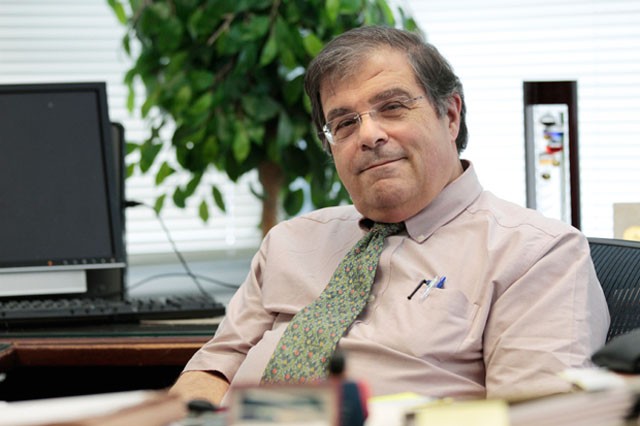
Image by Joe Michaud-Scorza
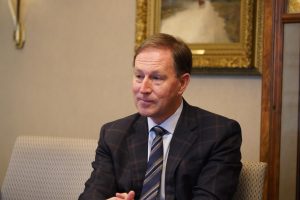
Academic Health Center Vice President and Medical School Dean Frank Cerra takes a break on Friday in his office at the Child Rehab Center.
Published December 14, 2010
