DentSims: to teach or to tout?

When the School of Dentistry brought 20 DentSims to the University, it characterized them as something that would revolutionize learning. But the lab is vacant 85 percent of the time, and some say the product doesn't match the publicity.
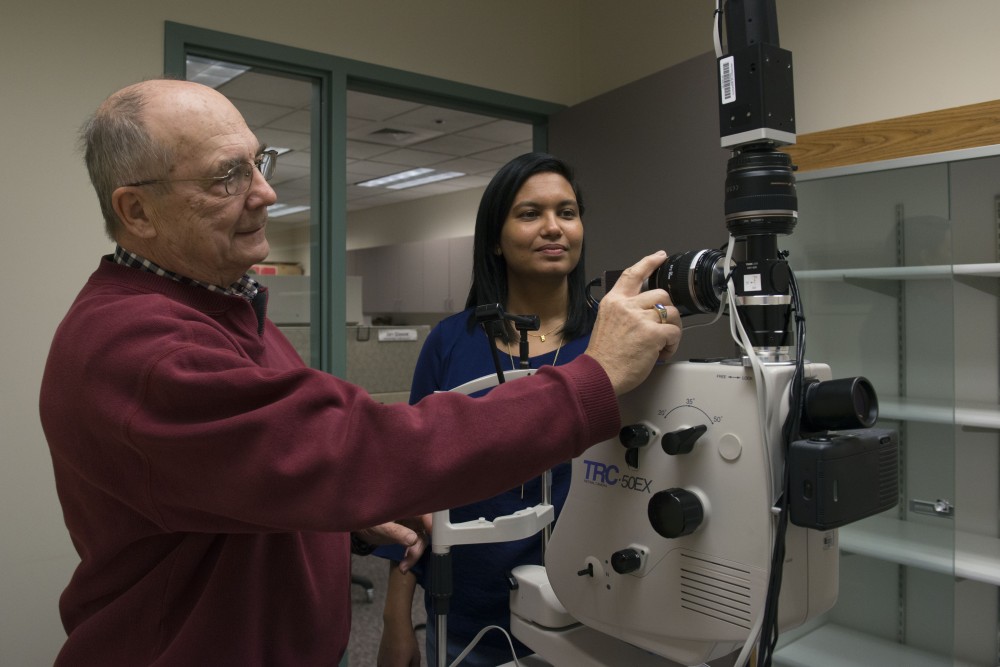
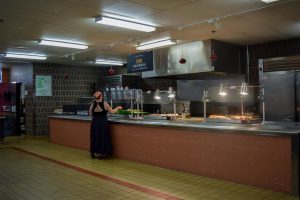
Assistant Professor Hearther Conrad demonstrates how students use the School of Dentistry's Simulation Clinic on Nov. 14 in Moos Tower.
December 01, 2011

In 2008, leaders of the University of Minnesota’s School of Dentistry got what they were looking for — a clinic to put the institution at the forefront of dental education.

Part of the clinic featured DentSims, a virtual simulation tool that the University said could revolutionize the way dental students learn. The school was the first in the Big Ten to get them.

Each DentSim features a mannequin with an adjustable head, a lifelike mouth and a set of plastic teeth. An infrared camera tracks students’ work and displays it on a screen. A computer offers instant feedback on how students perform and provides a 3D representation of the tooth they’re operating on.

The University spent $1.5 million for 20 DentSims during a roughly $10 million renovation of Moos Tower’s fourth-floor clinic area. The DentSims cost $75,000 each and sit in the School of Dentistry’s Advanced Simulation Clinic, part of a larger simulation area.

But the clinic hasn’t been the resource that administrators said it would be.

Nearly four years later, the dummies sit unused about 85 percent of the school year, according to a Minnesota Daily records analysis. The lab is in use for an average of 8.4 hours a week.

But only half of that use is for classes, and they’re mostly introductory ones. Tours, cleaning and maintenance take up the other half of the lab’s schedule.

The clinic remains controversial among faculty and students as a teaching and grading tool. It also comes at a substantial price.

Even though it’s rarely used, the University still touts the DentSim as a transformative teaching device. Some say the publicity doesn’t match the product.

‘Gold standard’

Research at the University and across the country suggests DentSims both help students learn faster and cut failure rates.

Judith Buchanan, interim dean of the University’s School of Dentistry, has been researching virtual reality teaching tools since the late 1990s.

Buchanan found students learn almost twice as fast with the technology, she told the Daily in 2006.

Since then, others like Heather Conrad, an assistant dentistry professor at the University, have also done research on the DentSim.

Image Navigation, the company that manufactures DentSims, displays more than a dozen examples of research on its website lauding simulation learning.

Lawrence Obstfeld, CEO of Image Navigation, said his company’s product is “not kibitzing.”

“We allow the student to work off a gold standard,” he said, “so DentSim is an incredible tool for any school.”


‘They sit there vacant’

Former School of Dentistry Dean Patrick Lloyd celebrated the University’s new DentSim units when the lab opened in 2008.

“The equipment has made us re-evaluate the way we educate dental students,” Lloyd said in a statement from that year. “It’s dental education designed for students raised in the digital era.”

But nearly four years later, the machines sit largely unused. Faculty members and students say the lab is often empty when they walk by it.

Schedules from fall 2010 through fall 2011 show the clinic is unused about 85 percent of the time. The clinic is booked for an average of 8.4 hours a week.

“They sit there vacant most of the time,” said one clinical faculty member who asked to remain confidential for fear of risking his job.

This spring, the clinic sat empty for the first half of March, except for an admissions demonstration. In the last week of the month, there were three different tours or demonstrations, two days of service and two hours of makeup class. The clinic was not used in May 2011 for anything other than cleaning.

At least 25 universities worldwide use DentSim, according to Image Navigation.

One is the University of Pennsylvania, which lab director Margrit Maggio said has 15 units of an older model.


‘Bells and whistles’

An attractive young woman stands in front of a man practicing his golf swing on a simulator.

“We have racing and flight simulators, even golf simulators,” she says. “So where is virtual reality going next?”

Former School of Dentistry Dean Lloyd has the answer.

“It’s this guy,” he says, patting a rubber dummy with an open mouth on the head.

“At the University of Minnesota, we’re learning dentistry in a whole new way,” he says. “At our simulation clinic, we’re practicing on lifelike mannequins. They’re connected to computers that give us immediate feedback on our students’ performance.”

This is not a live demonstration, but an advertisement commissioned by the University in 2007. The University spent $530,000 to produce four television commercials as part of its “Driven to Discover” campaign. The 30-second spot featuring the Advanced Simulation Clinic reached about 80 percent of the state over the next year.

“The Advanced Simulation Clinic makes for a great story to tell, both visually and as a remarkable resource for students,” University spokesman Jeff Falk wrote in an email.

With the clinic, the University continues to market itself as a leader in advanced education. President Eric Kaler visited Sept. 19 as part of his inaugural week public relations blitz. He and his wife, Karen Kaler, practiced on one of the machines.

The machines are also used to attract potential dental students, for tours and for foreign dentists to train on.

Some weeks, such tours and demonstrations match or outnumber classes. They make up nearly a quarter of the time the lab is used, but priority is given to faculty members scheduling class time.

The previously mentioned clinical faculty member called the machines an “administrative toy.”

“When they wanted to impress the president with the School of Dentistry, what did they show him?” he said. “They held his hand, they brought him into the computer simulation area and they turned on all the lights and bells and whistles. They let him play with it because you can do that.”

He said DentSims fool people who aren’t familiar with dentistry and the machine’s actual capabilities.

Buchanan wrote in an email that the technology is “designed for the primary purpose of helping students develop psychomotor skills.” The Advanced Simulation Clinic is just one of several labs that dentistry students learn in, she wrote.

Many directly involved in using the clinic for courses, research or demonstrations declined to comment publicly about the lab or didn’t return multiple requests for comment.

Lloyd also declined to comment.


‘On lockdown’

When the Advanced Simulation Clinic opened in 2008, Lloyd told the Daily that advanced technology would help with recruitment.

The University invites competitive applicants for a tour of the school, including the clinic, as part of their interview.

An upper-level dentistry student who asked for confidentiality because of a student leadership position came to the University because of the DentSims and other technological upgrades in the school that were touted at the time.

The student said it’s well-known within the school that the lab is rarely used and that there are problems with the technology.

“Everybody that’s there knows it,” the student said. “The students all know it, the faculty all know it and the administration thinks it’s the greatest thing since sliced bread.”

Dentistry second-years Nicole Haus, Salma Helal and Amy Ott said the clinic was plugged during their interviews at the School of Dentistry, but its use never really materialized.

“When we did our interview, that was huge,” Ott said. “They were like, ‘Oh, look at this, no other school has this.’”

The three agreed that their introductory class in the clinic wasn’t very useful and glossing over the material was easy. If she messed up drilling a tooth, Ott said she would just redo it.

“I wouldn’t do it the right way,” she said. “You can totally cheat the system for the class.”

A handful of courses use DentSims. Students spend at least 17 hours in the lab to learn 3-D thinking and build psychomotor skills, among other curriculum.

“The faculty have determined that they’re very limited usage and they utilize them to the fullest extent that they think is going to benefit the students,” the clinical faculty member said.

Now, Ott, Helal and Haus wish they could go back into the lab after learning more theory about the procedures they muddled their way through the first time.

But they’re not allowed to access the lab for after-hours practice, although that might change in the future. The clinic must be properly staffed because the DentSims are “sensitive to misuse,” Buchanan wrote in an email.

“They hype it up and then you get here and it’s on lockdown,” Helal said.

‘Superglue and gum’

The University has an all-inclusive maintenance contract with Image Navigation that costs $80,000 each year.

The DentSim contract is comparable to a different agreement the school has for its clinical information system, which “drives” the clinical operations of the school, Dentistry school Chief Administrative Officer Jeff Ogden said. The clinics serve about 100,000 patients each year.

Ogden, who signed the maintenance agreement, said that because the units are on the cutting edge of technology, they’re prone to small hang-ups. The University hasn’t had a disastrous failure yet, he said.

Students and faculty members describe the units as finicky, fickle machines that don’t work correctly.

The three second-years said the sections for the introductory psychomotor class had fewer students than machines. If a unit malfunctions, a student can switch to one that works.

In Pennsylvania, Maggio said she has used “superglue and gum” to hold parts of her older models together. But, like Buchanan and others, she stands behind the technology because of its educational potential.

The upper-level student disagreed.

“You have administrators who think that’s the new way of dentistry, and it doesn’t work.”

Minnesota Daily Serving the University of Minnesota Community since 1900